
SEM vs. SEO: What’s the Difference?

SEO vs. SEM is one of the most common (and most important) comparisons in digital marketing. Both aim to get your business in front of the right people on search engines like Google, but they take very different routes to get there.
In this guide, we’ll break down what separates SEO and SEM, how each one works, and when it makes sense to use one, the other, or both.
What is SEO? A Look at Organic Search Rankings
Search Engine Optimization (SEO) is the process of optimizing your website to rank in the organic (unpaid) search results. These are the listings that appear on a search engine results page because they’re relevant and trustworthy, not because someone paid for them to be there.
SEO involves several key practices:
- Creating useful, relevant content based on keyword research
- Ensuring your website loads quickly, is mobile-friendly, and is easy to navigate
- Optimizing page titles, meta descriptions, and internal links
- Earning backlinks from other reputable websites
- Providing a strong user experience and satisfying search intent
When done well, SEO builds long-term visibility and trust. You don’t pay per click, but instead, you earn traffic by providing valuable content that search engines deem worthy of a top spot.
What is SEM? Breaking Down Paid Search Results

Search Engine Marketing (SEM) involves using paid advertising to appear in search engine results. Unlike SEO, SEM is a paid approach where businesses bid to display ads for specific search terms.
SEM also includes Google Shopping ads, display ads, and video ads that appear on YouTube and across the Google Display Network.
Most SEM campaigns are run through Google Ads, where you can choose your keywords, set a budget, write ad copy, and direct users to a landing page. One of the most common formats is PPC (pay-per-click) advertising, where you only pay when someone clicks your ad.
Because SEM allows you to target users by location, interests, device, and time of day, it can deliver highly qualified traffic quickly. However, your visibility depends on your budget. Once the campaign stops or the budget runs out, so does your placement.
SEO vs. SEM: What Sets Them Apart?
If you’ve ever searched something and wondered why certain links show up at the top, some marked as “sponsored” and others not, you’ve already seen SEO and SEM in action.
At their core, both are about getting your business in front of the right people when they’re searching online. But while they share the same goal, they take very different paths to get there.

Search Engine Marketing (SEM) is the umbrella term for all strategies that help your site appear in search engines, including both paid ads and organic rankings. Technically, that means SEO is a piece of SEM. But in everyday marketing talk, people usually treat them as separate things: SEM = paid, SEO = organic.
So, what’s the difference? SEO is the long game. It’s about optimizing your website to rank naturally in search results, without paying for every click. This involves creating high-quality content, making sure your site loads quickly, earning backlinks, and staying aligned with search engine’s ever-evolving algorithm. Done right, SEO builds authority over time and can drive consistent traffic long after the work is done.
SEM, on the other hand, is the fast track. Using tools like Google Ads, you can bid on keywords to have your business appear right at the top of search results. It’s powered by PPC (pay-per-click), which means you only pay when someone clicks. This makes SEM a great option for getting eyes on your brand quickly, especially if you’re running a promotion, launching something new, or targeting competitive terms.
The key takeaway? SEO builds trust and visibility over time, while SEM gives you an immediate spotlight. They’re not rivals, they’re teammates. In fact, the best marketing strategies often combine both: SEM for quick wins and SEO for lasting impact.
Local Search and SEO: Driving Visibility in Your Area
If your business serves a specific region or has a physical location, local SEO is one of the most powerful tools you can use. It helps you show up in local search results when people search for services “near me” or within a specific area.
How Local Search Optimization Aligns with Local Search Intent
When people search for things like “plumber near me” or “best law firm in Columbia,” they’re showing local search intent. They’re looking for something nearby, and they’re often ready to act fast.
To show up in these moments, you need to focus on local search optimization. This includes targeting geo-specific keywords (like “Columbia SC HVAC repair”), creating location-based landing pages, and keeping your business information consistent across online directories.
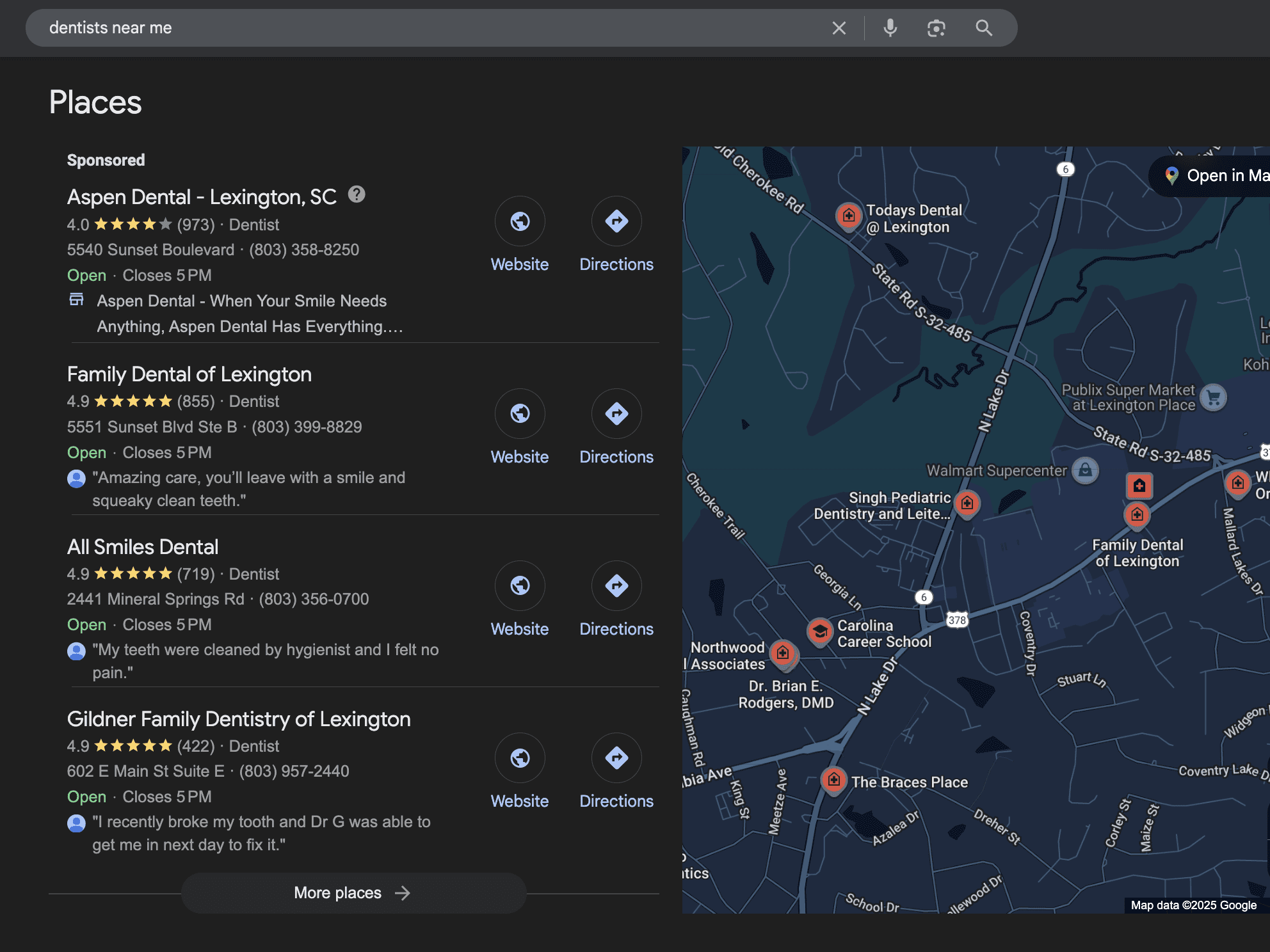
It also means claiming and optimizing your Google Business Profile, earning reviews, and building citations that help search engines connect your business to a specific area. These signals tell Google you’re not just relevant, you’re local.
When done right, local SEO meets customers exactly where they are: on their phones, ready to make a decision. And whether you’re showing up organically or through paid local ads, being visible in those moments is one of the fastest paths to real leads and sales.
How Search Engine Algorithms Influence SEO and SEM
Whether you’re optimizing for organic rankings or managing a paid ad campaign, everything in search runs on algorithms.
Search engine algorithms evaluate hundreds of factors to determine which websites and ads appear where. For SEO, the algorithm looks at content quality, site structure, page load speed, keyword relevance, and link authority. For SEM, Google’s ad algorithm considers your bid amount, ad relevance, landing page experience, and expected click-through rate.
Even though SEM involves paid placements, it’s not just about outbidding your competition. If your ad is poorly written or links to an irrelevant page, Google may rank it lower, or not show it at all, even if you’re paying more than someone else.
Understanding these algorithmic influences is essential to creating a strategy that works long-term. If you want help creating a data-backed strategy that aligns with these systems, get in touch with us.
Choosing the Right Strategy
There’s no one-size-fits-all answer when it comes to SEM vs. SEO, and honestly, that’s a good thing. The right approach depends on your goals, timeline, and how quickly you need to see results.
If you want to get to the top of search results fast and have the budget to support it, SEM gives you that instant visibility. If you’re playing the long game and want to build steady, lasting traffic while earning trust with your audience, SEO is your go-to. Most successful brands don’t choose between them, they use both strategically.Not sure where to start? That’s what we’re here for. Let’s talk about your goals, your audience, and how we can help you get the kind of results that actually move the needle.